Vision Kyrgyzstan — reach · equip · empower

Karakol, Kyrgyzstan · Founded 2019

Support Our Work

Our Mission

Vision Kyrgyzstan seeks to reach, equip, and empower youth, raising up the next generation of young Christian leaders in Kyrgyzstan.

1
Reach

We reach them through evangelism and discipleship in our Muslim-majority region.

2
Equip

We equip them through education and social service, and professional skills development.

3
Empower

We empower them through training them as leaders and providing them with resources as they serve their families and community.

Our Vision

That our youth would multiply the work we do, taking the Gospel to every unreached corner of Kyrgyzstan and Central Asia, particularly rural regions.

That our centre and church would be a place of hope and rest for vulnerable people amidst economic and relational hardship and trauma.

That our city and region would be transformed in Christian community.

Our Programmes

Language Courses

Language Courses

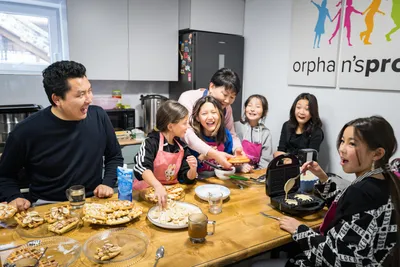
English and Korean language classes meet 2–3 times per week. Participants also gather for game nights and arts and crafts.

Leadership Academy

Leadership Academy

Our older middle- and high-school students learn leadership, community service, and critical thinking based on Scriptural principles and the ministry of Jesus.

School of Life

School of Life

Vulnerable teenage girls are mentored while building practical life skills and hearing the Gospel.

Transforming Lives

Transforming Lives

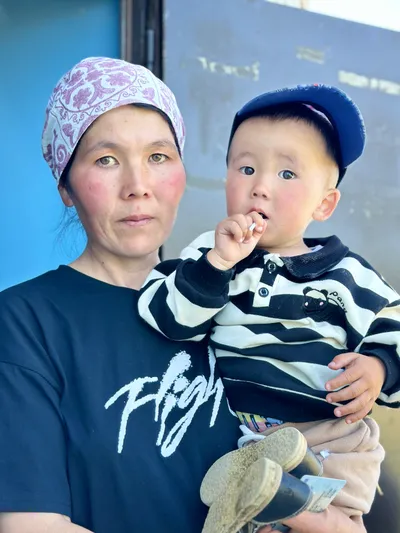
We work with many vulnerable women and families: “social orphans”, victims of bridal kidnapping, and single mothers. Through social programmes, we affirm their dignity as beloved children of God.

Summer Outreach

Summer Outreach

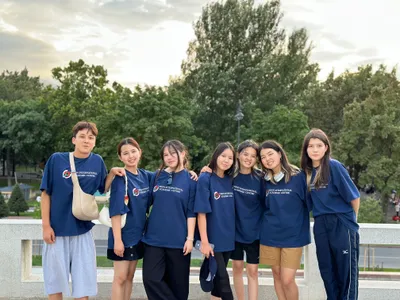
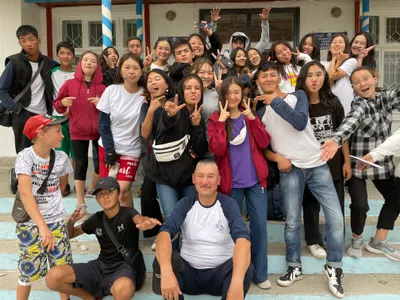
In 2026, we’ll run 6 camps in villages across Kyrgyzstan. Each offers more than 200 kids a week of Scripture-based spiritual and educational activities.

Our Story

From a chance meeting in Bishkek to a growing centre serving hundreds of young people in Karakol.

2018

Callaway and Aziz meet at a church service in Bishkek. Aziz feels called to return to his hometown of Karakol.

2019

Vision Kyrgyzstan registered and accredited. Callaway moves to Kyrgyzstan. First class begins October 2019.

2020

COVID-19 disrupts classes. The team pivots to public health, food security, and church support.

2021

Eugene comes to faith at a summer camp. First full-time English teacher hired. Classes resume.

2022

Russia invades Ukraine; Kyrgyz migrants return home amid economic turmoil. Callaway returns to US, marries Chancy. First US mission team visits Karakol.

2023

Team travels to Turkey for Central Asia missions conference, laying groundwork for international partnerships.

2024

Annual budget exceeds $50,000—up 10× from founding. Building fundraising campaign launches.

2025

Building property purchased. $300,000 RBNF grant secured. 600+ children attend summer camps. Building shell completed by December.

2026

New building nearing completion. Capacity expanding from 150 to 300+ students. 6 summer camps planned across Kyrgyzstan. Vision Kyrgyzstan branding adopted.
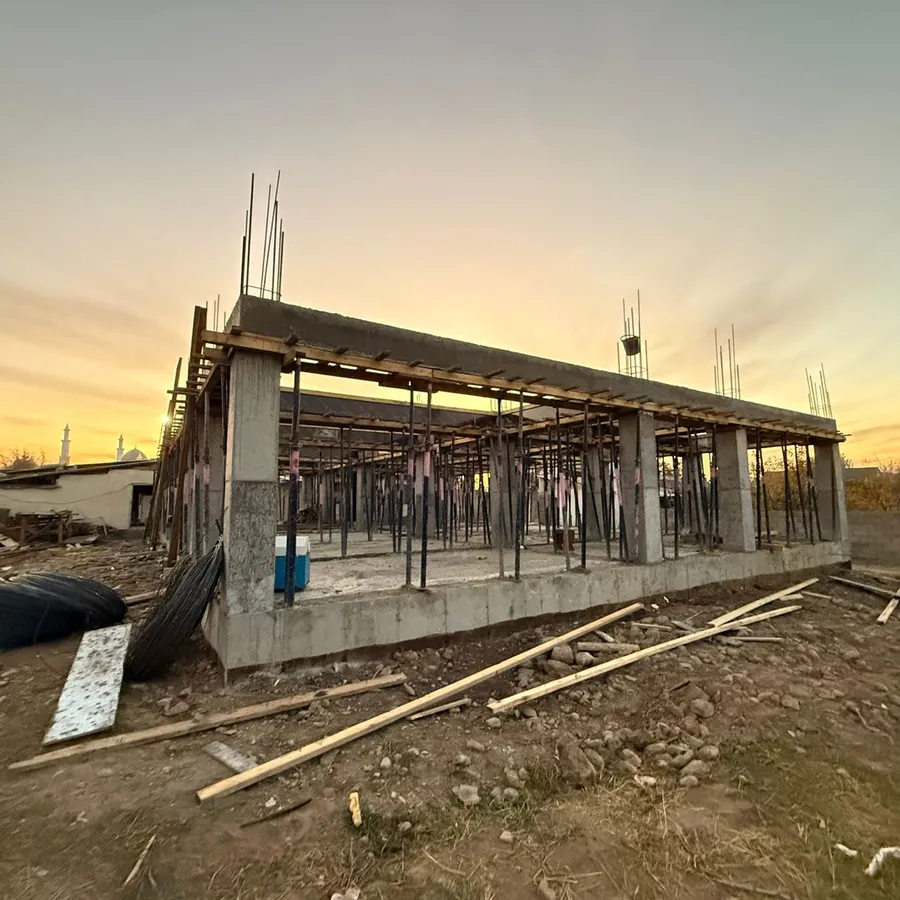
Our new building under construction, October 2025

Our new building under construction, October 2025. Capacity expanding from 150 to 300+ students.


Our Team

Callaway Sprinkle

Callaway Sprinkle

International Director

United States

Co-founder. After meeting Aziz at a church service in Bishkek, he moved to Kyrgyzstan to help launch the centre. Now based in the US, he manages communications, donor relationships, and grant writing.

Aziz Abakirov

Aziz Abakirov

Operations Director

Karakol, Kyrgyzstan

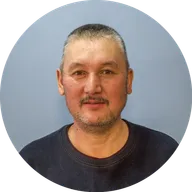
Co-founder. Born and raised in Karakol, Aziz felt called to return to his hometown to serve its young people. He leads all on-the-ground programming and coordinates partnerships across Central Asia.

Eugene Papaudin

Eugene Papaudin

Programme Manager & Youth Coordinator

Karakol, Kyrgyzstan

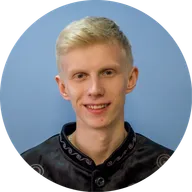
Zhenya first encountered the Gospel at a summer camp in 2021. Today he serves at Word of Life Church, studies early childhood education at Issyk-Kul State University, and manages our programmes and administration.

Chynara Abakirova

Chynara Abakirova

Family Counsellor & Women’s Ministry

Karakol, Kyrgyzstan

A nurse by training, Chynara brings our health and wellness programming to life and leads our work with vulnerable women and families in the Issyk-Kul region.

Almaz Abakirov

Almaz Abakirov

Pastor & Facilities Manager

Karakol, Kyrgyzstan

Pastor of Word of Life Church Karakol, which meets in our building. Almaz provides spiritual oversight for the ministry and manages our facilities and construction.

Emima Zarylbekova

Emima Zarylbekova

Administrator

Karakol, Kyrgyzstan

Our newest team member. Emima supports day-to-day administrative operations and has quickly become a trusted mentor to our students.

Stories of Change

Z
Zhenya , 23

From searching for identity in Islam to finding it in Christ at a summer camp.

Read more

Zhenya grew up in Bishkek with his grandmother and great-grandparents. His father died when he was small, and his mother struggled with alcoholism, unable to care for him. He was raised by his grandmother — the one person who never gave up on him. But even her love couldn’t fill the void left by a broken family.

By 16, Zhenya was exhausted by pain and hopelessness. Searching for structure and meaning, he enrolled in an online Islamic academy. For three years he split his days between working as a cook and studying Islamic scripture, fasting and praying with a discipline that surprised even himself. But the emptiness wouldn’t lift. The more he studied, the more distant God felt.

In 2021, a friend invited him to a youth evangelism camp in Karakol. He went reluctantly, expecting nothing. What he found was a community of young people who radiated a joy he couldn’t explain. For the first time, he heard the Gospel — not as a set of rules, but as a story of a Father who had been pursuing him all along. “Something broke inside me,” he says. “Not in a painful way — more like a wall I’d been building for years finally came down.”

He gave his life to Christ that week. The transformation was not instant but it was real. He moved to Karakol, joined Word of Life Church, and began serving with the centre full-time. He enrolled at Issyk-Kul State University to study early childhood education, determined to equip himself properly for the work he felt called to do.

Today Zhenya manages our programmes, mentors younger volunteers, and is one of the first people our students turn to when life gets hard. His grandmother remains his only surviving relative in Kyrgyzstan. “I now know my calling is to shepherd the young people of Kyrgyzstan so they too can find their identity in Christ,” he says. “I know what it feels like to search everywhere for something only God can give.”

R
Rustam , 15

From painfully shy to leading a sports club for younger students.

Read more

Rustam lives with his mother and younger sister. When he was seven, his parents divorced after years of his father’s drinking and violence. He remembers nights when they fled the house in the dark, hiding from his father. Since then, Rustam has been working to help support the family. His mother is a taxi dispatcher earning four to five dollars a day; they rent a small flat for about $70 a month. She married young and never finished school, so better-paying work is out of reach.

Rustam found us through an Instagram ad. When he first came, he was painfully shy — wouldn’t answer questions, wouldn’t join in, stood in the corner during activities. Building any kind of connection was slow. You had to speak a little louder just to get a response.

I remember when we sat down to eat after a cooking session: Rustam devoured three full portions of pirozhki, far more than most adults. That’s when I understood why he kept coming back — he wasn’t interested in our programmes yet. He needed to eat, because at home there wasn’t enough. Seeing him, my heart ached. I saw myself twenty-four years ago.

But God has been changing Rustam, and changing him profoundly. Today he is one of the most active participants in our volunteer school. He took the initiative to run a sports club once a month, helping younger children stay healthy in body and spirit.

In his eyes I see a hunger for God. We meet with him individually and share about God the Father — a God who loves him. “I don’t understand the concept of God or the concept of a father,” Rustam says honestly, “since I never had a good father growing up.” But we see him striving with all his heart to know God. He’s more open, more confident, more alive. “I really like it here,” he says, “especially the atmosphere of acceptance and friendship.”

A
Amina , 11

The oldest of four children, learning to dream again.

Read more

Amina is the oldest of four children. Her parents are very young — her mother married at sixteen and had to drop out of school, so she has no professional qualifications. Three months ago, Amina’s father emigrated to Russia looking for work to feed the family, but as a migrant in Moscow he struggles to find steady employment. The family rents a flat for about $110 a month; her mother works evening shifts at a public bathhouse to make ends meet, leaving Amina to care for her siblings.

We met Amina’s mother when she heard about us through a neighbour. When she learned that our programmes were free, she was overjoyed — she had never been able to afford extracurricular activities for her children.

The first time Amina came, we noticed immediately how anxious she was. She was also completely closed off, constantly checking on her younger brothers and sisters, carrying them when they cried, taking them to the bathroom. Despite being only eleven, she behaved like an adult. For the first few weeks, Amina refused to play with the other children. She preferred to sit and watch, always keeping an eye on her siblings. When our volunteers offered to look after the younger ones so that Amina could join in, something began to shift.

Over the following weeks, Amina started playing, little by little. She laughed more. She talked to the other children. She began to engage with the lessons — especially the dancing and crafts. We watched a girl who had been carrying the weight of her whole family slowly learn to feel like a child again.

Not everything goes smoothly — years of that protective instinct don’t disappear overnight. But today Amina is more open, more cheerful. “I really like it here,” she says, “especially when they feed us. And I love dancing and learning the English alphabet — soon we’ll learn body parts, and I can’t wait to learn new words.” Her mother tells us, beaming, that every day Amina runs home and excitedly recounts everything she learned. When we asked Amina about her dreams, she told us she wants to become a businesswoman and open her own shop.

R
Roza , 19

From depression and thoughts of suicide to finding hope and community.

Read more

Roza is nineteen, from Karakol. She is the oldest of four children. When the bank foreclosed on their house in the village, her family moved to the city looking for a better life. Her father went to Russia to work on construction sites, paying off debts. On his small salary, a family of six struggles — especially in winter, when heating bills soar.

We first met Roza when she came with her younger sister to ask about English lessons. She struck us as unusually adult for a nineteen-year-old. We learned that she had dropped out of school because of the family’s financial situation and was working as a hairdressing assistant. By nature she is very private, but the more she brought her sister to our classes, the more we noticed she wanted to talk to us, that something was drawing her in.

One day, as we sat together, Roza started crying and began telling us about herself. Behind the stern exterior of someone forced to grow up too fast, we saw a small girl carrying deep wounds. She told us that since childhood she had been the “unloved child” in the family, punished for the smallest mistakes. Before she found us, she frequently thought about suicide. She felt profoundly alone: “My parents were never interested in what I think or care about. At school I had no friends — the kids always laughed at my weight.” All she had ever done was look after her younger siblings.

We invited Roza to join our volunteer programme. She thought about it for a few weeks, then agreed. At first she didn’t speak to anyone — she sat apart and said she felt out of place, even unwanted. We encouraged her to take a small first step. To her surprise, the other participants quickly connected with her.

Today Roza has changed enormously. We’re working to get her back into school to finish her secondary education; it will take a couple of years, but she is determined. Each week we meet for one-on-one mentoring where she is beginning to think deeply about God. “Coming here was one of the best decisions of my life,” she says. “I can’t imagine what might have happened to me without you. You definitely saved me.”

N
Nurman , 10

A bullied, anxious boy who found his first real friend.

Read more

Nurman is ten years old. He lives in Karakol, just five minutes from our centre — on the very same street. He’s in the fourth grade. There is a seriousness in his eyes that doesn’t belong to a child. He doesn’t rush to speak or push to be the centre of attention. He watches first, as if making sure the world around him is safe.

His mother, Zharkyn, is forty and raises two children alone — Nurman and his older sister. She works as a daycare aide five days a week, earning about $155 a month. That barely covers their one-room flat, utilities, food, and school supplies. His father left the family when Nurman was three months old.

The family heard about us from neighbours: “There’s a new centre on the street with English classes.” Zharkyn brought his older sister first, then Nurman. When she explained her situation to our manager, he offered Nurman a free place in our Friends Club.

At school, things are hard. He struggles with reading. He gets bad marks. Classmates mock him, saying his parents don’t love him because his mother never comes to school events — she’s working. For a ten-year-old, those words leave a mark. When he’s anxious, he bites his nails — his quiet way of coping.

When he first came to the centre in September 2025, he was closed off, hiding in mobile games on his phone. For the first few months he just watched, as though checking whether this place was safe. Gradually, things changed. We gently helped him form a new habit: when he arrives, the phone goes away. Now he does it on his own. He loves the crafts and drawing. English is hard, but there’s one topic that lights him up — fruit. When apples, bananas, and oranges come up in a lesson, he comes alive, repeating the words carefully, trying to get the pronunciation right. During tea breaks he always asks for tea with milk and carefully dips his biscuit. In those moments he looks calm and happy — just a boy who is warm.

Over six months, Nurman has made his first close friend. They wait for each other before class; if one doesn’t show up, the other is upset. He’s still serious, but he smiles more during games. When a mentor asked if he likes it here, he answered quietly: “I like it here more than at home.” Those words weren’t a criticism of his mother — she tries her hardest. They showed how much this boy needs a place where he is noticed, supported, and accepted as he is. Nurman dreams of becoming a pilot. He loves planes and helicopters. He loves looking at the sky.

K
Karina , 15

Bullied and isolated, she found calm and acceptance through mentorship.

Read more

Karina is the second child in her family. She has an older brother who was her closest friend throughout childhood — the person she could talk to about everything. When he left for Turkey to work, Karina felt truly alone for the first time. “We used to be together all the time,” she says, “and then he left, and I had no one to talk to like that.” Her parents work long hours selling phones and electronics, trying to provide for the family. They care, but there isn’t always time for conversation. Karina grew up independent and strong on the outside — but deeply sensitive within.

At school, she was bullied relentlessly over her appearance. The harassment grew so painful that after ninth grade she had to change schools entirely. “I felt like something was wrong with me all the time,” she says. That’s when she started wearing heavy makeup. Later she explained honestly: “I thought that if I looked beautiful, people would accept me. Maybe even love me.” It became her mask — a way to hide her vulnerability and earn the approval she craved.

When Karina first came to our centre through an acquaintance, she seemed proud and a little distant — but it was armour, not indifference. Later she admitted: “I want to seem outgoing, but the truth is I have very few real friends.” Her mother told us: “She never stuck with anything for more than a month. We signed her up for different clubs, but it was always hard for her. Sometimes she would just lie at home all day and not go anywhere.”

What surprised everyone was that Karina stayed. She started coming regularly — to volunteer meetings, youth gatherings, English and Korean classes. Not because anyone pushed her, but because here she felt safe. Here no one compared or judged. And then Emima entered her life. Not as a mentor but as a friend. They started talking after meetings, going for walks, drinking coffee. Emima visited Karina at home, and Karina visited Emima. “With Emima, I feel calm. I don’t need to be someone else,” Karina said.

Over time she shared an important realisation: “I understood that popularity doesn’t bring happiness. And that you can’t earn love and acceptance through makeup. Only friendship can give you that.” On Christmas Eve, Karina heard about Jesus for the first time. It was a warm evening of light, laughter, and conversation. She listened carefully, and afterwards said quietly: “I didn’t understand everything, but it was interesting.” Nothing changed dramatically. But something began to shift inside. She smiles more. She’s calmer and softer. After Christmas, her mother came to the centre with a cake and told us: “I can see she’s different. This is the only place she actually wants to go. I can see she’s happy here.”

Support Our Work

Your generosity makes our work possible. All donations are tax-deductible through our US fiscal sponsors.

Give through MRDS

Millennium Relief and Development Services

Best for individual support

Houston-based 501(c)(3).

Fee: 5% administrative fee, no minimum

General fund: VIACentre.001

Support Aziz directly: VIACentre.AAA

Enter the relevant account code on the donation page.

Donate →

Give through TrustBridge

TrustBridge (via National Christian Foundation)

Best for gifts over $30,000

International donor-advised fund.

Fee: Minimum $300 or 1% of donation

Search: #243223

Search for “Vision Kyrgyzstan” or use code #243223.

Donate →

In Prayer

  • That God would shield our students and us from religious persecution
  • That minds and hearts would be opened to the Gospel through us
  • For health and recovery for team members battling illness
  • That ongoing construction of our new building would go smoothly
  • We’re looking for partners for summer camps—please reach out if you feel called to come to Kyrgyzstan to serve!